Applications of 3D Metal Printing in Various Industries
3D metal printing is transforming the landscape of manufacturing and design across multiple industries. This innovative technology allows for the creation of complex geometries and customized parts that were previously impossible or prohibitively expensive to produce. As industries continue to explore the potential of 3D metal printing, its applications are becoming more diverse and impactful. In this blog post, we will delve into the various sectors that are leveraging this technology, highlighting specific examples and the benefits they reap.
Understanding 3D Metal Printing
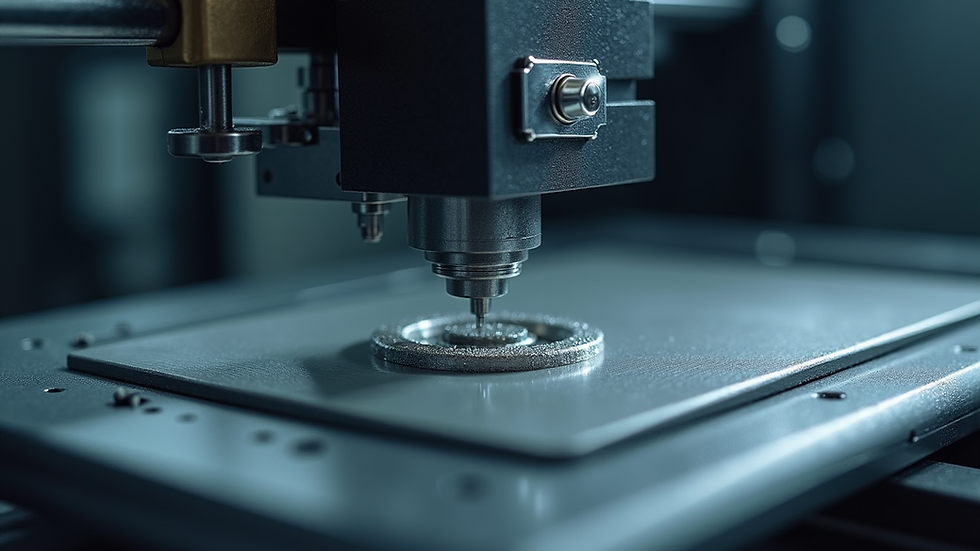
Before we explore its applications, it's essential to understand what 3D metal printing entails. This process, also known as additive manufacturing, involves creating objects layer by layer from metal powders. The most common methods include:
Selective Laser Melting (SLM): Uses a high-powered laser to melt and fuse metal powders.
Electron Beam Melting (EBM): Similar to SLM but uses an electron beam in a vacuum environment.
Binder Jetting: Involves binding metal powders with a liquid binder, which is later sintered to create solid parts.
These methods enable the production of lightweight, strong, and intricate components that traditional manufacturing methods struggle to achieve.
Aerospace Industry
The aerospace sector is one of the most significant beneficiaries of 3D metal printing. The ability to produce lightweight parts with complex geometries leads to improved fuel efficiency and performance.
Example: GE Aviation
GE Aviation has been at the forefront of integrating 3D metal printing into its manufacturing processes. The company produces fuel nozzles for its LEAP jet engine using additive manufacturing. These nozzles are not only lighter but also more efficient than their traditionally manufactured counterparts. By consolidating multiple parts into a single component, GE has reduced the weight of the nozzle by 25% and improved its performance.
Benefits
Weight Reduction: Lighter components lead to lower fuel consumption.
Complex Designs: Ability to create intricate shapes that optimize airflow and performance.
Reduced Lead Times: Faster production cycles allow for quicker turnaround on parts.
Automotive Industry
The automotive industry is also embracing 3D metal printing to enhance design flexibility and reduce production costs.
Example: BMW
BMW has implemented 3D metal printing in its production lines to create custom parts for its vehicles. The company uses this technology to manufacture lightweight components for its racing cars, which helps improve speed and efficiency. Additionally, BMW has developed a unique approach to producing spare parts on demand, reducing inventory costs and waste.
Benefits
Customization: Tailored parts for specific models or customer preferences.
Cost Efficiency: Lower production costs for small batches.
Sustainability: Reduced waste through on-demand production.
Medical Industry
In the medical field, 3D metal printing is revolutionizing the way implants and prosthetics are designed and manufactured.
Example: Materialise
Materialise, a leader in 3D printing solutions, has developed custom titanium implants for patients undergoing orthopedic surgeries. These implants are designed to fit the unique anatomy of each patient, improving the chances of successful integration and recovery.
Benefits
Personalization: Custom implants tailored to individual patient needs.
Improved Recovery: Better fitting implants lead to enhanced healing.
Reduced Surgery Time: Pre-manufactured parts can shorten the duration of surgical procedures.
Defense and Military
The defense sector is increasingly utilizing 3D metal printing for rapid prototyping and production of critical components.
Example: U.S. Army
The U.S. Army has begun using 3D metal printing to create spare parts for vehicles and equipment in the field. This capability allows soldiers to produce necessary components on-site, reducing downtime and logistical challenges associated with transporting parts.
Benefits
Rapid Prototyping: Quick development of new designs for testing and evaluation.
On-Demand Production: Ability to manufacture parts as needed, reducing supply chain dependencies.
Cost Savings: Lower costs associated with inventory and transportation.
Energy Sector
The energy sector, particularly oil and gas, is also exploring the advantages of 3D metal printing.
Example: Siemens
Siemens has adopted 3D metal printing to produce components for gas turbines. The ability to create complex geometries improves the efficiency of these turbines, leading to better energy output and reduced emissions.
Benefits
Efficiency Improvements: Enhanced designs lead to better performance.
Reduced Emissions: More efficient components contribute to lower environmental impact.
Faster Production: Quicker turnaround times for critical components.
Conclusion
3D metal printing is reshaping industries by enabling the production of complex, customized parts that enhance performance and efficiency. From aerospace to healthcare, the applications are vast and varied, demonstrating the technology's potential to solve real-world challenges. As more industries adopt this innovative approach, we can expect to see even greater advancements and efficiencies in manufacturing processes.
The future of 3D metal printing looks promising, and its continued evolution will undoubtedly lead to new applications and opportunities across various sectors. Embracing this technology could be the key to staying competitive in an ever-evolving market.
Comments