Enhancing Manufacturing Efficiency with 3D Metal Printing
The manufacturing landscape is evolving rapidly, and one of the most significant advancements in recent years is 3D metal printing. This technology is not just a trend; it is reshaping how industries approach production, design, and efficiency. By enabling the creation of complex geometries and reducing material waste, 3D metal printing is becoming a vital tool for manufacturers looking to enhance their operations.
Understanding 3D Metal Printing
3D metal printing, also known as additive manufacturing, involves creating three-dimensional objects by layering materials, typically metal powders. This process contrasts sharply with traditional subtractive manufacturing methods, where material is removed from a solid block to create a part.
Key Technologies in 3D Metal Printing
Several technologies are used in 3D metal printing, including:
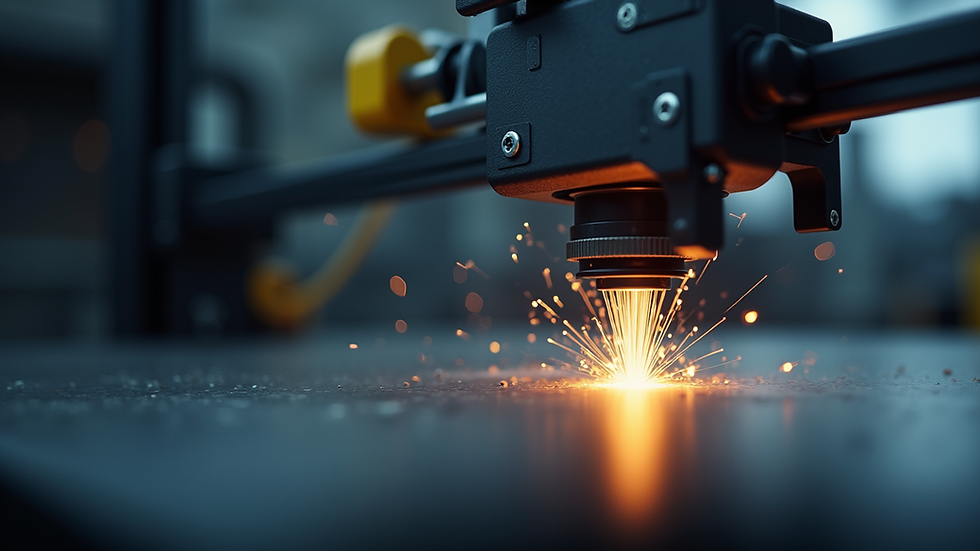
Selective Laser Melting (SLM): This technique uses a high-powered laser to melt and fuse metal powders together, layer by layer.
Electron Beam Melting (EBM): Similar to SLM, EBM uses an electron beam instead of a laser, allowing for faster processing times and the ability to work with reactive materials.
Binder Jetting: This method involves depositing a binding agent onto layers of metal powder, which are then sintered to create solid parts.
Each of these technologies has its advantages and is suited for different applications, making it essential for manufacturers to choose the right one for their needs.
Benefits of 3D Metal Printing in Manufacturing
1. Design Flexibility
One of the most significant advantages of 3D metal printing is the ability to create complex geometries that would be impossible or prohibitively expensive to achieve with traditional manufacturing methods. This flexibility allows designers to innovate without being constrained by the limitations of conventional machining.
2. Reduced Material Waste
Traditional manufacturing often results in significant material waste, as excess material is cut away during the production process. In contrast, 3D metal printing is an additive process, meaning that material is only used where it is needed. This not only reduces waste but also lowers costs associated with raw materials.
3. Shorter Lead Times
With 3D metal printing, manufacturers can produce parts on-demand, significantly reducing lead times. This capability is particularly beneficial in industries where rapid prototyping and quick turnaround times are critical, such as aerospace and automotive.
4. Lightweight Components
3D metal printing allows for the creation of lightweight components without sacrificing strength. This is particularly important in industries like aerospace, where reducing weight can lead to significant fuel savings and improved performance.
5. Customization
The ability to easily customize parts for specific applications is another advantage of 3D metal printing. Manufacturers can produce tailored solutions for their clients, enhancing customer satisfaction and loyalty.
Real-World Applications of 3D Metal Printing
Aerospace Industry
The aerospace sector has been one of the early adopters of 3D metal printing technology. Companies like Boeing and Airbus are using this technology to produce lightweight components that improve fuel efficiency. For example, Boeing has successfully integrated 3D-printed parts into its 787 Dreamliner, resulting in reduced weight and increased performance.
Medical Devices
In the medical field, 3D metal printing is revolutionizing the production of implants and prosthetics. Custom implants can be designed to fit the unique anatomy of individual patients, improving outcomes and reducing recovery times. Companies like Materialise are leading the way in this area, creating patient-specific solutions that enhance surgical precision.
Automotive Manufacturing
The automotive industry is also leveraging 3D metal printing to create complex parts that improve vehicle performance. For instance, companies like Ford are experimenting with 3D-printed engine components that are lighter and more efficient than their traditionally manufactured counterparts.
Challenges and Considerations
While 3D metal printing offers numerous benefits, it is not without its challenges.
1. Material Limitations
Not all metals are suitable for 3D printing. Manufacturers must carefully select materials that can withstand the printing process and meet the performance requirements of the final product.
2. Equipment Costs
The initial investment in 3D metal printing equipment can be significant. Manufacturers must weigh the costs against the potential benefits to determine if this technology is right for their operations.
3. Post-Processing Requirements
Many 3D-printed metal parts require post-processing to achieve the desired surface finish and mechanical properties. This additional step can add time and cost to the production process.
4. Skill Gap
There is a learning curve associated with adopting 3D metal printing technology. Manufacturers may need to invest in training their workforce to effectively use and maintain the equipment.
Future Trends in 3D Metal Printing
As technology continues to advance, several trends are emerging in the field of 3D metal printing:
1. Increased Material Variety
Research is ongoing to expand the range of materials that can be used in 3D metal printing. This will open up new possibilities for industries looking to innovate.
2. Automation and Integration
The integration of automation in 3D metal printing processes is expected to increase efficiency and reduce labor costs. Automated systems can streamline production and minimize human error.
3. Sustainability Focus
As industries become more environmentally conscious, the sustainability of 3D metal printing will be a key focus. Efforts to recycle metal powders and reduce energy consumption during the printing process will gain traction.
4. Enhanced Software Solutions
Advancements in software will improve the design and simulation capabilities for 3D metal printing. This will enable manufacturers to optimize their designs before production, reducing waste and improving efficiency.
Conclusion
3D metal printing is transforming the manufacturing landscape by offering unprecedented design flexibility, reducing material waste, and enabling rapid prototyping. While challenges remain, the benefits of this technology are clear. As industries continue to explore the possibilities of 3D metal printing, it is essential for manufacturers to stay informed and adapt to these changes. By embracing this technology, companies can enhance their efficiency, reduce costs, and remain competitive in an ever-evolving market.
The future of manufacturing is here, and it is time to take the leap into the world of 3D metal printing.
Comments